

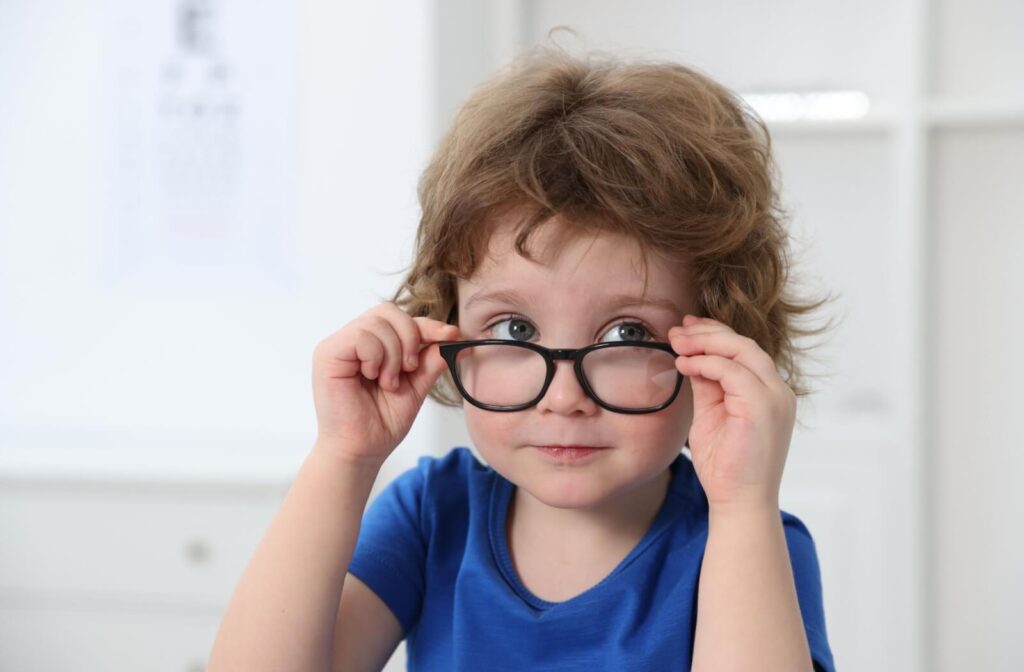
Myopia, also known as nearsightedness, makes it difficult to see far away objects. At Upper Appleby Eye Care, our team can help you understand this common condition, which often develops during childhood and often worsens over time.
While standard eyeglasses make distant objects clear, myopia eyeglasses are designed to do more. These glasses not only correct your blurry vision, but they can also help slow down the progression of myopia.
What Is Myopia & Why Does It Matter?
Myopia happens when the shape of your eye causes light to focus in front of the retina (a tissue at the back of your eyes) instead of directly on it. This makes far-away objects look fuzzy.
Signs of Myopia in You or Your Child
- Squinting to see distant objects more clearly
- Holding books or devices very close to the face
- Sitting near the front in classrooms or close to the TV
- Experiencing frequent headaches or eye strain
The Importance of Myopia Management
When left unmanaged in children and teenagers, myopia tends to progress. High myopia increases a person’s risk for other serious eye conditions later in life, including retinal detachment, glaucoma, and cataracts. That’s why proactive management is important.
How Myopia Glasses Differ from Standard Glasses
You may wonder what makes myopia control glasses different from the single vision glasses that most people wear. The main difference lies in their purpose—standard glasses just correct vision, while myopia control glasses correct vision while also helping to slow the condition’s progression.
Standard Single Vision Lenses
These are the most common type of lenses. They have one prescription power throughout the entire lens, and they correct blurry vision.
Myopia Control Lenses
Myopia control lenses are designed not only to correct blurry vision, but also to slow down elongation of the eye—the biggest contributing factor to myopia’s progression. They do this by changing how light is focused on the periphery (the outer part) of the retina, which signals the eye to slow unwanted growth.
Types of Myopia Control Spectacle Lenses
Several types of lenses have been developed for myopia control. Here are two of the most common options:
Peripheral Defocus Lenses
These lenses look like standard single vision lenses, but contain hundreds of tiny lenslets across the surface. These lenslets create a “slow down” signal for eye growth, while the rest of the lens provides clear central vision.
Bifocal & Progressive Lenses
Bifocal and progressive lenses have different prescription zones for near and distance vision. Certain designs have shown a moderate effect in slowing myopia progression in some children.
Do Myopia Control Glasses Really Work?
Myopia control is a proactive approach to children’s eye health. While the numbers vary from person to person, Stellest lenses have been shown to slow myopia progression in children by up to 67%.
Lower levels of myopia correlate with better vision and a reduced risk of eye health complications in the future.
Who Is a Good Candidate?
Myopia control lenses are usually recommended for children and teenagers whose eyes are still growing and whose myopia is actively progressing. An eye doctor can determine if myopia control eyeglasses are the right choice for your child based on a comprehensive eye exam.
Other Myopia Control Treatments
Eyeglasses are a popular and effective option, but they aren’t the only way to manage myopia. Depending on your child’s needs and lifestyle, your eye doctor may discuss other treatments.
Multifocal Contact Lenses
Much like myopia control glasses, multifocal contact lenses use different zones of focus in order to slow down growth of the eye.
Atropine Eye Drops
Low-dose atropine drops are used once a day to relax the eye’s focusing muscles. This treatment helps slow myopia progression in children, but does not correct blurry vision, so glasses or contact lenses are still necessary.
Protect Your Child’s Vision
The first step in managing myopia is a thorough eye exam. Our team at Upper Appleby Eye Care uses diagnostic technology like MYAH and corneal topography to get a detailed view of your child’s eyes and help develop a management plan.
We can assess your or your child’s vision and discuss the most suitable myopia control options for their situation, so request an appointment with our team today.