

Knowing what an appointment involves makes it easier to schedule. And when your afternoon already has a school pickup or a meeting in it, a vague time estimate doesn’t help you plan.
Most eye exams take between 20 and 60 minutes, though the exact time depends on your age, health history, and the type of testing your doctor recommends. An optometrist can walk you through what your specific visit might involve based on your needs.
How Long Does an Eye Exam Take On Average
The length of your eye exam depends on a few factors, but most visits fall within a predictable window. A routine eye exam usually breaks down like this:
- Children: 15 to 45 minutes, depending on how long they stay engaged with the testing
- Adults under 65: 25 to 45 minutes for a standard visit
- Seniors 65 and older: 30 to 55 minutes, since more health screening comes with age
- Anyone visiting a new clinic: add 10 or 15 minutes for history and baseline measurements
What Makes an Eye Exam Take Longer
First visits take longer than follow-up visits. We need a full picture of your eye health before we can compare future results.
Health conditions add a few minutes too. If you live with diabetes or high blood pressure, we may take a closer look at the blood vessels at the back of your eye. A family history of eye disease can also mean earlier screening.
Dilation drops widen your pupils so more of the retina is visible. They need 20 to 30 minutes to take full effect, so factor that in when you’re booking around other commitments.
Trying contact lenses adds a fitting, where we measure the surface of your eye and check how the lens sits. We also use imaging technology that shows the retina in detail without drops, which can keep some appointments shorter than they once were.
What Happens During a Comprehensive Eye Exam
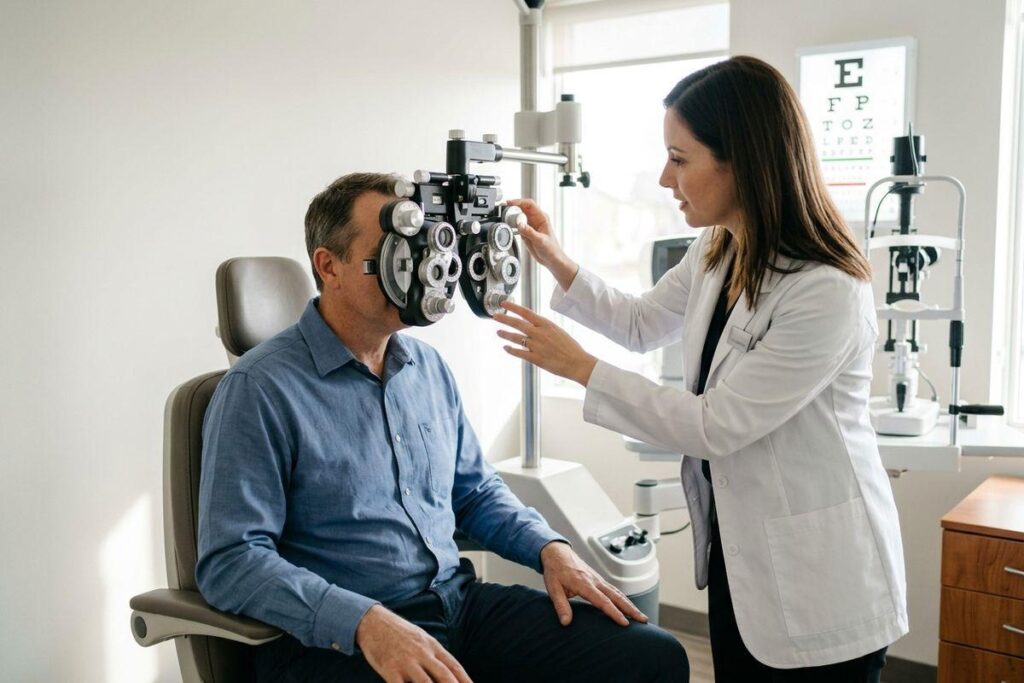
You’ll start by reading letters off a chart to measure how sharply you see at a distance. From there, we use a phoropter, the machine with the rotating lenses, to fine-tune your prescription.
Colour vision and peripheral vision checks come next. Both can reveal changes that a basic vision test would miss.
Eye Health and Disease Screening
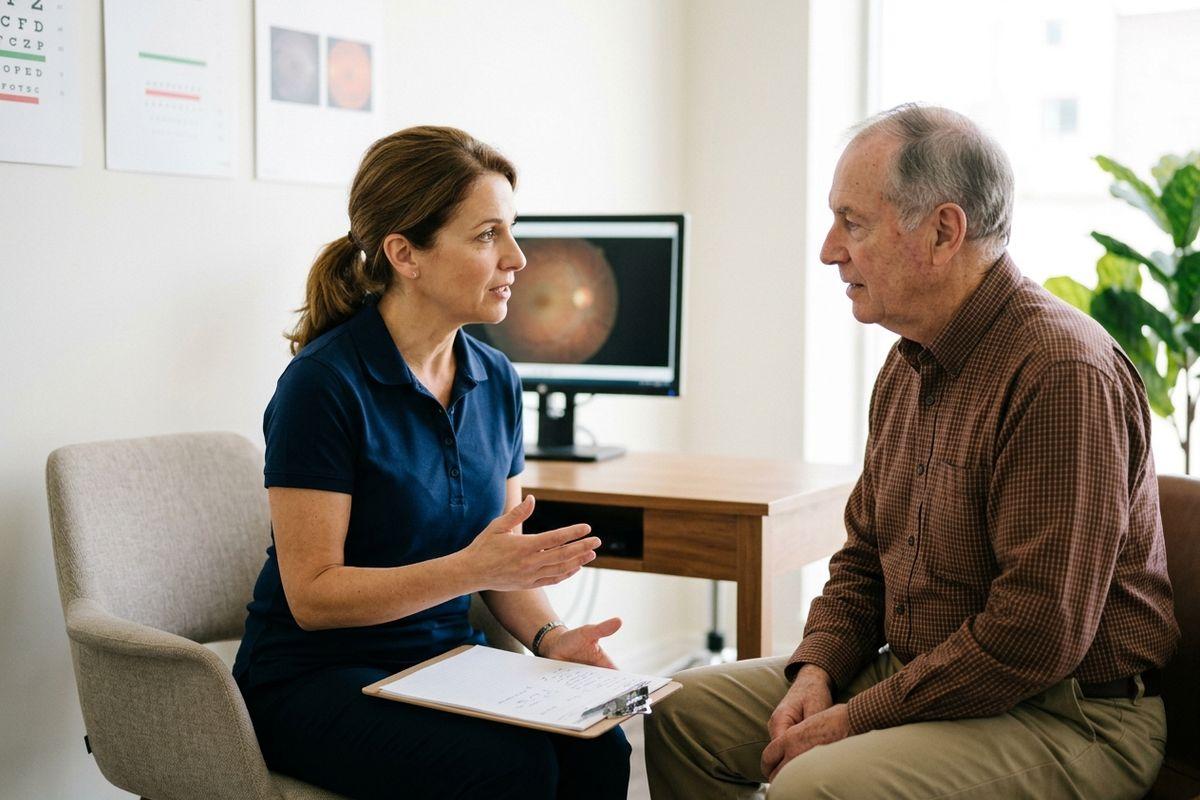
The health portion of the visit looks past your prescription to the structures of the eye itself:
- Retinal imaging captures a wide view of the tissue lining the back of your eye
- OCT scans show that same tissue in cross-section, layer by layer
- Glaucoma testing measures the pressure inside your eye and maps your field of vision
- A slit lamp gives us a magnified look at the cornea and the lens
- Corneal mapping measures the curve of your eye’s surface, which matters for contact lens fit
How Often to Book an Eye Exam
Your vision can feel fine while something changes quietly in the background, which is why the schedule is based on age and risk instead of symptoms. Recommended intervals for healthy eyes look like this:
- Children and teens from 6 to 19: once a year, since vision can change quickly during growth
- Adults from 20 to 64: every 2 years
- Adults 65 and older: once a year, as age-related eye conditions become more common
Come in sooner if something changes, like new floaters or headaches that won’t let up.
How to Prepare for Your Eye Exam
Bring a list of your medications, along with anything you know about eye problems in your family. Both shape what we look at more closely.
Arrange a ride home if dilation is part of the plan, because your vision may stay blurry for a few hours afterward. Pack sunglasses too. Dilated pupils let in more light than usual, and the parking lot can feel bright on the way out.
Dilation can last up to 6 hours. Screens may be harder to focus on during that stretch, so keep the rest of your day light if you can.
Need new glasses? Our on-site edger lets us cut and fit lenses here instead of sending the job out, which may shorten the wait before you pick them up.
Book Your Next Eye Exam
An hour covers almost every visit, including the extra testing and the questions you’ve been meaning to ask. Most people are out sooner than that.
Upper Appleby Eyecare cares for patients at every stage, from a child’s first exam to ongoing management of eye disease, and we’ll tell you upfront if your appointment needs more time than usual. Book your appointment, and we’ll take care of the rest.