


Blurry vision does not always mean your prescription needs updating. Sometimes the cause sits right on the surface of your eye, in the thin layer of tears that keeps light focused.
Yes, dry eye can cause blurry vision. Tears have to stay smooth and even for your sight to hold steady, and when that layer thins out or breaks apart, things go soft until you blink. A thorough eye exam can show whether dryness explains what you have been noticing, and dry eye treatment may be worth exploring from there.
What Is Dry Eye and Why It Affects Your Vision
Tears do more than keep your eyes moist. They form a thin coating over the surface of your eye that helps light pass through smoothly on its way to your retina. When that coating is even and stable, your vision stays sharp.
The film has 3 layers, and each one has a job:
- Oil on the outside slows evaporation.
- Water in the middle rinses away dust and keeps the surface comfortable.
- Mucus underneath helps tears spread evenly instead of beading up and sliding off.
When any of these layers break down, the tear film can become patchy or uneven. Light passing through those rough patches scatters instead of focusing cleanly, and that’s what creates the blur you notice.
Signs Your Blurry Vision Comes From Dry Eye
Dryness rarely arrives on its own. Watch for the other signs of dry eye that tend to show up alongside it:
- Stinging or burning, especially after a long stretch on screens
- Redness paired with sensitivity to bright light
- Watery eyes, which sounds backwards until you learn that an irritated surface floods itself to compensate
- Vision that sharpens for a few seconds after you blink, then softens again
- A gritty feeling, like sand you cannot rinse out
Timing offers another clue. Dry eye blur usually comes and goes across the day rather than sitting at one steady level, and it tends to be worst during tasks that hold your attention, such as reading, driving at night, or working through a spreadsheet.
When Blurriness Signals Something Else
Blurriness that sticks around after you blink, rest your eyes, or use drops may point to a different cause. Sudden changes in vision, double vision, or blurriness in just one eye need attention from an optometrist for emergency eye care rather than home care alone.
Common Causes Behind Dry Eye
Long stretches of screen time cut your blink rate nearly in half, so tears evaporate faster than your eyes can replace them. Dry, windy, or air-conditioned rooms pull moisture from your eyes the same way they dry out your skin.
Contact lenses can also reduce the oxygen and moisture reaching your eye’s surface, especially after several hours of wear. A proper contact lens fitting can help match your lenses to your comfort needs.
Tear production naturally slows as you get older, which is why dry eye symptoms become more common after age 50. Hormonal shifts during menopause can reduce tear quality as well. Certain medications, including antihistamines, some blood pressure drugs, and antidepressants, can dry out your eyes as a side effect.
Small Habits That Can Ease the Dryness
Mild symptoms often respond to changes you can start today:
- Keep artificial tears within reach and use them before your eyes turn scratchy.
- Rest a warm compress over closed lids for several minutes to soften the oil in the glands along your lash line.
- Follow the 20-20-20 rule and look at something 20 feet away for 20 seconds every 20 minutes of screen time.
- Run a humidifier in the rooms where you spend the most hours.
- Drink water throughout the day, since hydration and sleep both feed into how well your eyes stay moist.
What an Optometrist Can Add
Home care only goes so far. When symptoms hang around, an optometrist has options that reach further:
- Prescription drops that calm inflammation on the surface of the eye
- Punctal plugs that slow tear drainage so moisture stays where you need it
- In-office treatments that use light or heat to clear blocked oil glands
Blurriness that interferes with reading, driving, or working at a screen shouldn’t be something you just work around.
Find Out What’s Behind the Blur
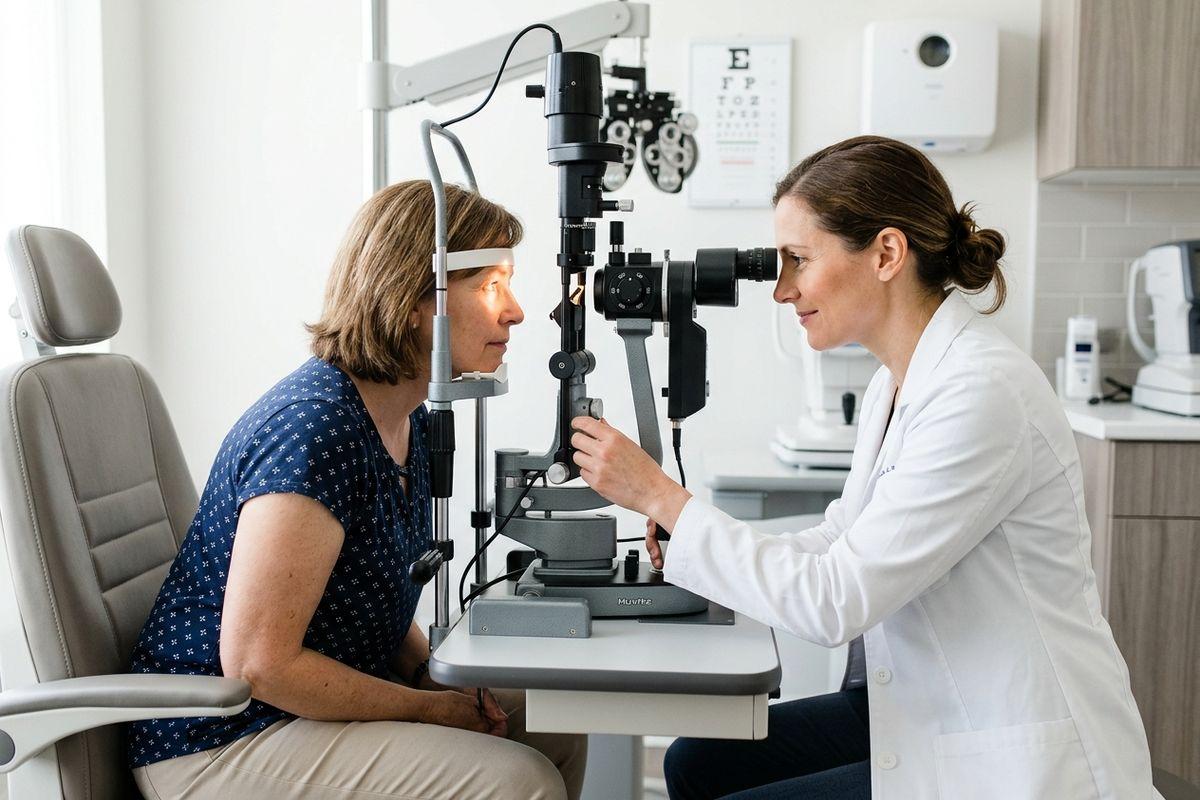
An optometrist can use an eye exam to map your tear film and check the glands along your lids, which gives you an answer instead of a guess.
The team at Upper Appleby Eyecare uses diagnostic imaging to see what is happening across the surface of your eye, with appointments available 6 days a week. Book your appointment and find out what your eyes have been trying to tell you.