

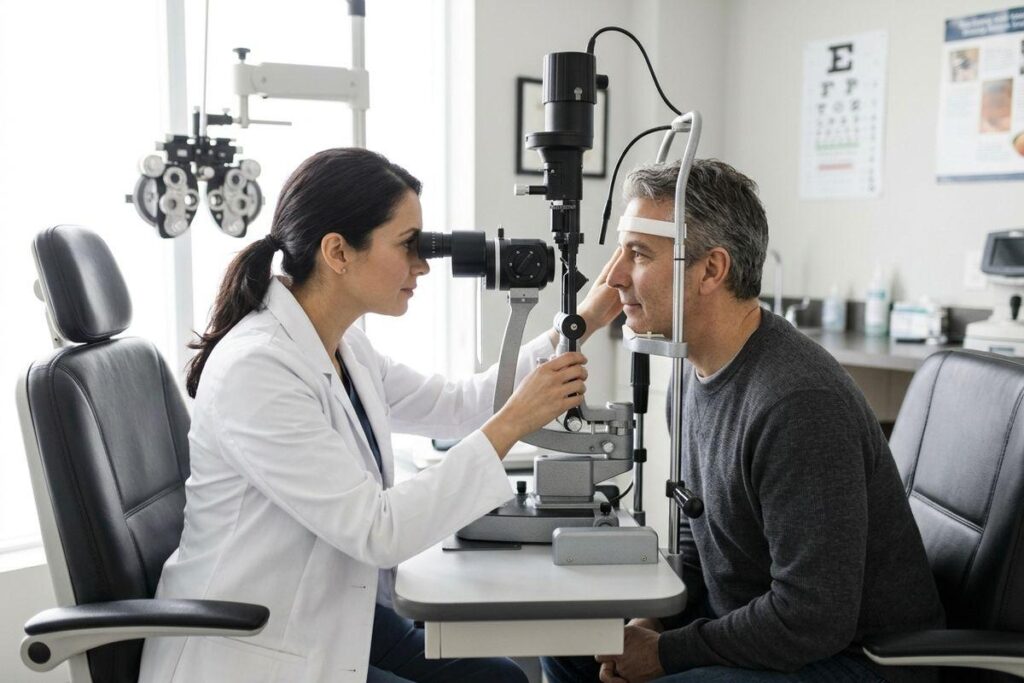
Does glaucoma run in your family? Explore how family history connects to glaucoma, plus symptoms and screening guidance from an optometrist in Burlington, ON.
Glaucoma diagnoses have a way of rippling through a family. One relative gets the news, and everyone else starts wondering about their own eyes. Glaucoma also tends to develop quietly, without pain or noticeable vision changes early on, which is exactly why your optometrist asks about family history at every comprehensive eye exam.
Yes, glaucoma is hereditary in many cases, and having a close relative with the condition can double or even quadruple your own risk.
Genetics is only part of the story, though. Age, ethnicity, and certain health conditions play a role too, and sharing your family history helps your optometrist know what to watch for at your exams.
Does Glaucoma Run in Families?
Research points to a clear genetic thread running through many glaucoma cases. If your mother, father, or sibling has glaucoma, your own risk climbs compared to that of someone with no family history.
But risk isn’t the same as certainty. Having a relative with glaucoma doesn’t mean you’ll develop it, too. It just means your optometrist may recommend closer monitoring and more frequent checks as you get older.
Do You Inherit It from Mom or Dad?
Glaucoma genes can come from either side of the family, not just one parent. Ask about eye health on both your mother’s and father’s sides. Even a grandparent or aunt with glaucoma is worth mentioning at your next exam.
Types of Glaucoma with Strong Genetic Links
Not all glaucoma looks the same, and some types carry a stronger genetic link than others.
Primary Open-Angle Glaucoma
This form accounts for most glaucoma cases and has one of the more well-documented genetic links. In some people, it can develop earlier and progress faster, which is part of why regular screening matters so much.
Other Hereditary Types
A few other hereditary types are worth knowing about, too:
- Congenital glaucoma appears at birth or in early infancy and often runs in families.
- Angle-closure glaucoma develops when the drainage angle in the eye is narrower than usual.
- Pigmentary glaucoma develops when pigment from the iris builds up and blocks fluid drainage in the eye.
Other Factors That Raise Your Risk
Genetics sets the stage, but a few other factors add to your overall risk. Age plays a big part, too: glaucoma cases rise noticeably after 60, and ethnicity and overall health matter as well.
Certain health conditions can also raise your risk:
- Diabetes can affect blood flow to the optic nerve.
- High blood pressure puts added strain on delicate eye tissue.
- Thyroid conditions have been linked to changes in eye pressure.
What Age Does Glaucoma Usually Start?
Most people notice glaucoma symptoms, if any appear at all, after 60. A strong family history can push that timeline earlier, sometimes into your 40s or 50s. That’s another reason your optometrist asks about relatives during your exam.
First Signs to Watch For
Glaucoma rarely announces itself early on. Most people notice nothing at all until side vision starts to narrow, and by that point some vision loss has already happened.
In rare acute cases, watch for these signs:
- Sudden eye pain
- Blurred vision
- Halos around lights
- Redness in the eye
- Nausea alongside eye symptoms
Can You Prevent Glaucoma If It Runs in Your Family?
You can’t change your genes, but you can lower your overall risk and spot changes early. Book regular eye exams with dilation so your optometrist gets a direct view of your optic nerve.
Keep your blood pressure and blood sugar in a healthy range to support your eye health, too. And share your family history at every visit, since a new diagnosis among relatives can change your own screening schedule.
A glaucoma diagnosis doesn’t mean vision loss is inevitable from here. Treatment can slow the pace of change, and ongoing monitoring helps your doctor adjust your care plan as needed to protect the sight you have now.
Eye Exam Tests and Family Support
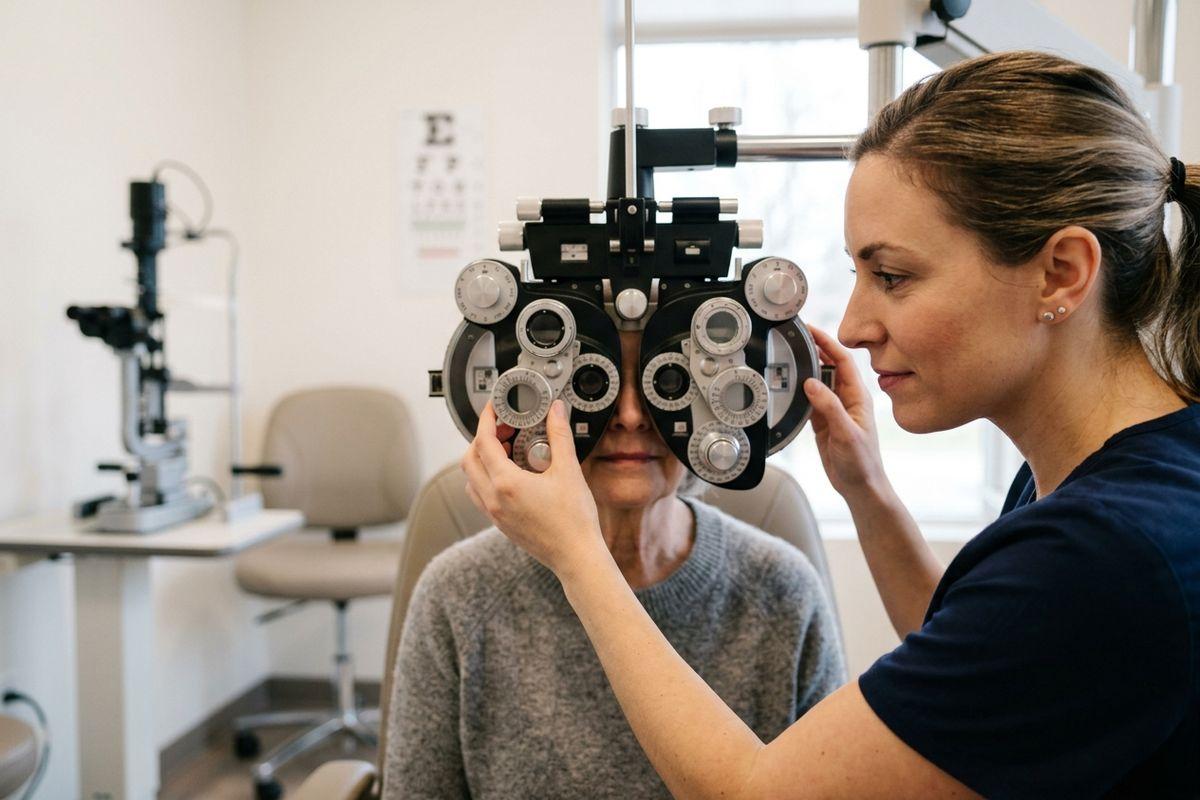
A comprehensive eye exam looks at far more than eye pressure alone. Optic nerve imaging shows structural changes before they affect your vision, and visual field tests map out any gaps in your side vision.
This kind of detailed diagnostic testing supports earlier detection and more informed treatment choices.
The Rule of Five for Glaucoma
Many optometrists follow a simple guideline: close relatives of someone with glaucoma should start regular screening around 40, or 5 years before the age their family member was diagnosed. Use this as a starting point for building your own exam schedule.
Talk to Relatives About Eye Tests
Family gatherings offer a natural moment to bring up eye health. Mention your own exam results and ask relatives about theirs.
If you’ve received a glaucoma diagnosis, share the facts calmly. Include your age at diagnosis and the type you have, so relatives can pass that information along to their own optometrist.
Start the Conversation, Then Book the Exam
Glaucoma may run in families, but your regular eye exams are what actually protect your sight going forward. Talk to your relatives, note who’s been diagnosed and at what age, and bring that information with you to your next appointment.
Upper Appleby Eyecare supports families through every stage of glaucoma care, from first screening to long-term monitoring. Book a comprehensive eye exam and build a screening plan around your own family history.